 Blendary Notes Hub
The Art of Iteration: Documenting Your Scene's Evolution
Home > Blog > The Art of Iteration: Documenting Your Scene's Evolution
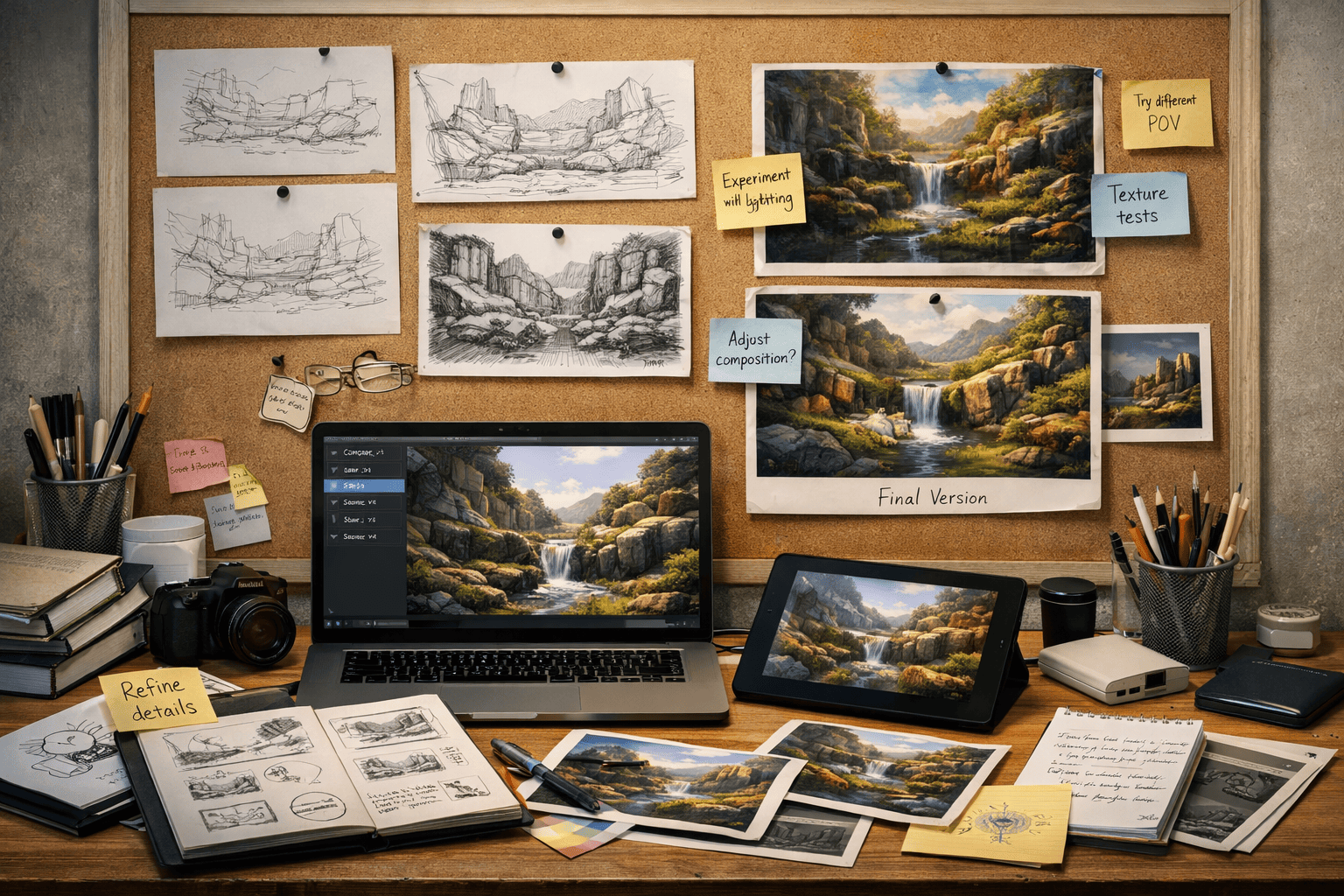
The creative process, particularly in visual arts or design, is rarely a linear journey. It's a dynamic exploration, a series of refinements and reinterpretations. Each iteration, no matter how minor, contributes to the final vision. Understanding this iterative nature is crucial for effective project management and artistic growth. Without proper documentation, these crucial evolutionary steps can be lost, hindering future development and collaboration.
Many creators grapple with capturing the transient stages of their work. A scene might undergo numerous transformations, from initial concept sketches to detailed renderings, each phase offering unique insights. The challenge lies in systematically recording these changes in a way that is both accessible and informative. Simply saving multiple files with generic names often leads to confusion and inefficiency, making it difficult to revisit specific ideas or track progress accurately.
The absence of a structured approach to documenting scene evolution can lead to significant setbacks. Imagine needing to revert to an earlier design decision but being unable to locate the precise version, or struggling to explain a design choice to a team member without visual evidence of its development. This lack of historical context can impede decision-making, increase revision cycles, and ultimately impact project timelines.
At Blendary Notes Hub, we recognize the profound value in every step of the creative journey. Our philosophy emphasizes that every iteration tells a story. Documenting these stories not only preserves the artistic intent but also serves as an invaluable learning tool. It allows creators to analyze their process, identify patterns, and refine their methodologies for future endeavors, fostering continuous improvement.
Embracing a disciplined approach to iteration documentation transforms a chaotic workflow into a well-organized, insightful process. It's not merely about archiving files; it's about building a comprehensive narrative of your scene's development. This narrative empowers individuals and teams to make informed decisions, streamline communication, and celebrate the journey from concept to completion.
Implementing a robust version control system is the cornerstone of effective scene documentation. This extends beyond simple "save as" operations, embracing dedicated tools that allow for chronological tracking of changes, branching for experimental ideas, and merging different iterations seamlessly. Such systems provide a clear history of every modification, making it possible to revert to any previous state with confidence. They also facilitate collaborative environments, ensuring no valuable work is ever truly lost.
Beyond just file versions, a comprehensive system includes metadata for each iteration. This might involve brief descriptions of changes, the rationale behind specific design choices, or notes on challenges encountered. This contextual information is vital for understanding the "why" behind each version. It transforms a collection of files into a living archive of creative decisions, invaluable for reviews and knowledge transfer.
Visual documentation is as critical as file versioning. Taking regular snapshots or renders of your scene at key developmental stages provides an immediate visual reference for its evolution. These images, coupled with concise annotations, can quickly convey the state and intent of a particular iteration. Effective annotation includes highlighting specific areas of change, noting design considerations, or even posing questions for future exploration, making complex changes understandable.
The true art of iteration lies in making documentation an intrinsic part of your daily workflow, not an afterthought. This means establishing clear protocols for saving, naming conventions, and annotation practices from the outset of a project. Tools and platforms that seamlessly integrate version control, visual documentation, and communication can significantly streamline this process. It requires a shift in mindset, viewing documentation not as a burden, but as an essential component of creative excellence.
Documenting your scene's evolution is more than just good practice; it's a strategic imperative for any creative endeavor. It safeguards your artistic legacy, provides clarity in complex projects, and empowers teams to work with greater efficiency and understanding.
By embracing structured version control, visual annotations, and integrated workflows, creators can transform the iterative process from a potential source of chaos into a powerful engine for innovation and continuous improvement. This approach fosters a deeper connection with the work.
Blendary Notes Hub champions this methodical approach, believing that a well-documented journey is just as important as the destination. Investing in robust documentation practices is an investment in the quality, consistency, and long-term success of your creative projects.